

By Wyatt McAvoy, Head of Product at Village. Founder of College Boys' Home Solutions, a $50K pressure washing and home services business he ran before college.
People ask how I found customers for my pressure washing business and expect to hear about ads, lead gen services, or some kind of growth hack. The real answer is less exciting and a lot more repeatable. I posted on Nextdoor, for free, once a week, for six months straight, and that alone built the whole client base.
Step one: the first post
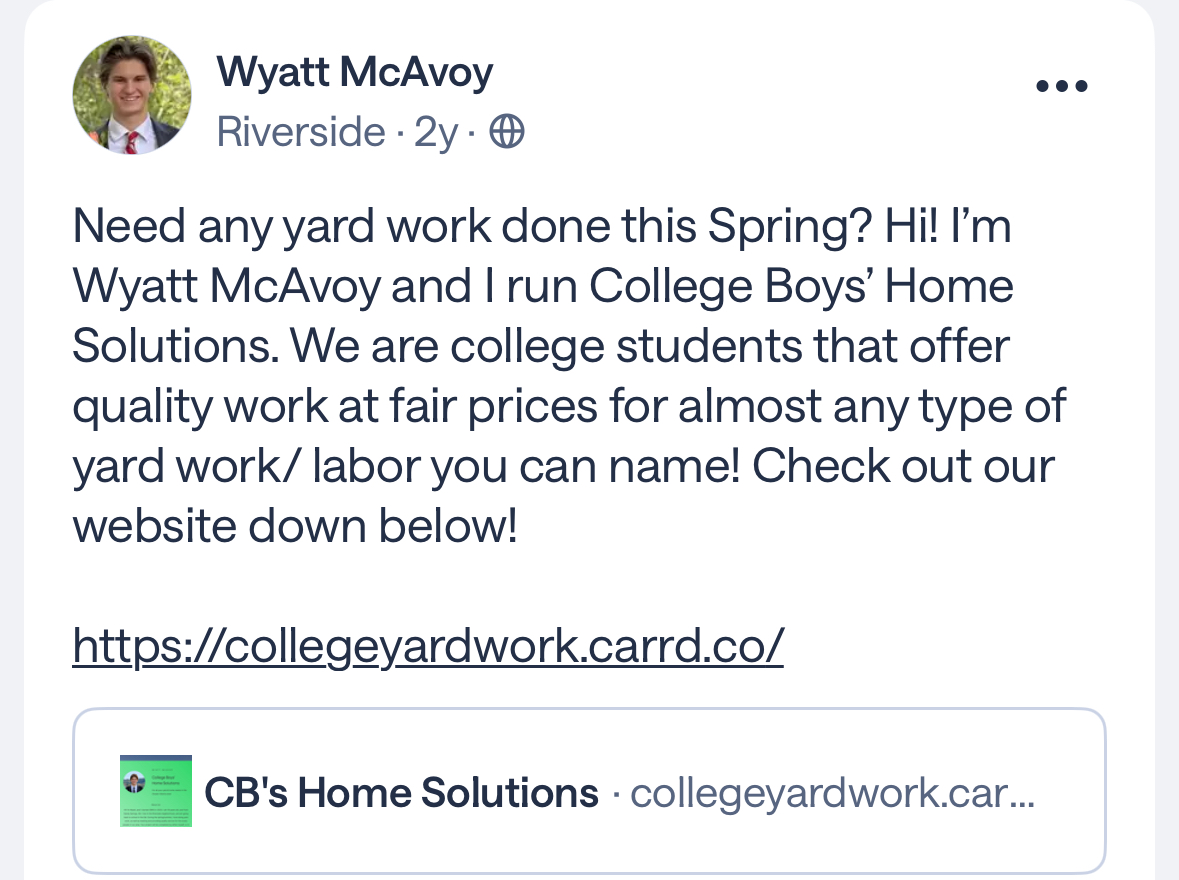
I started posting in March, right when Georgia weather turns and homeowners start looking at their driveways and siding again. The post itself said who I was, what I did, and the fact that I was a local college student running my own operation, with my number at the bottom.
That college student detail mattered more than anything else in the post. People scroll Nextdoor because it's their neighborhood, and a local student hustling to build something is exactly who they want to root for. Every post worked like an introduction more than a pitch, and I never spent a dollar boosting one.
Step two: the rhythm
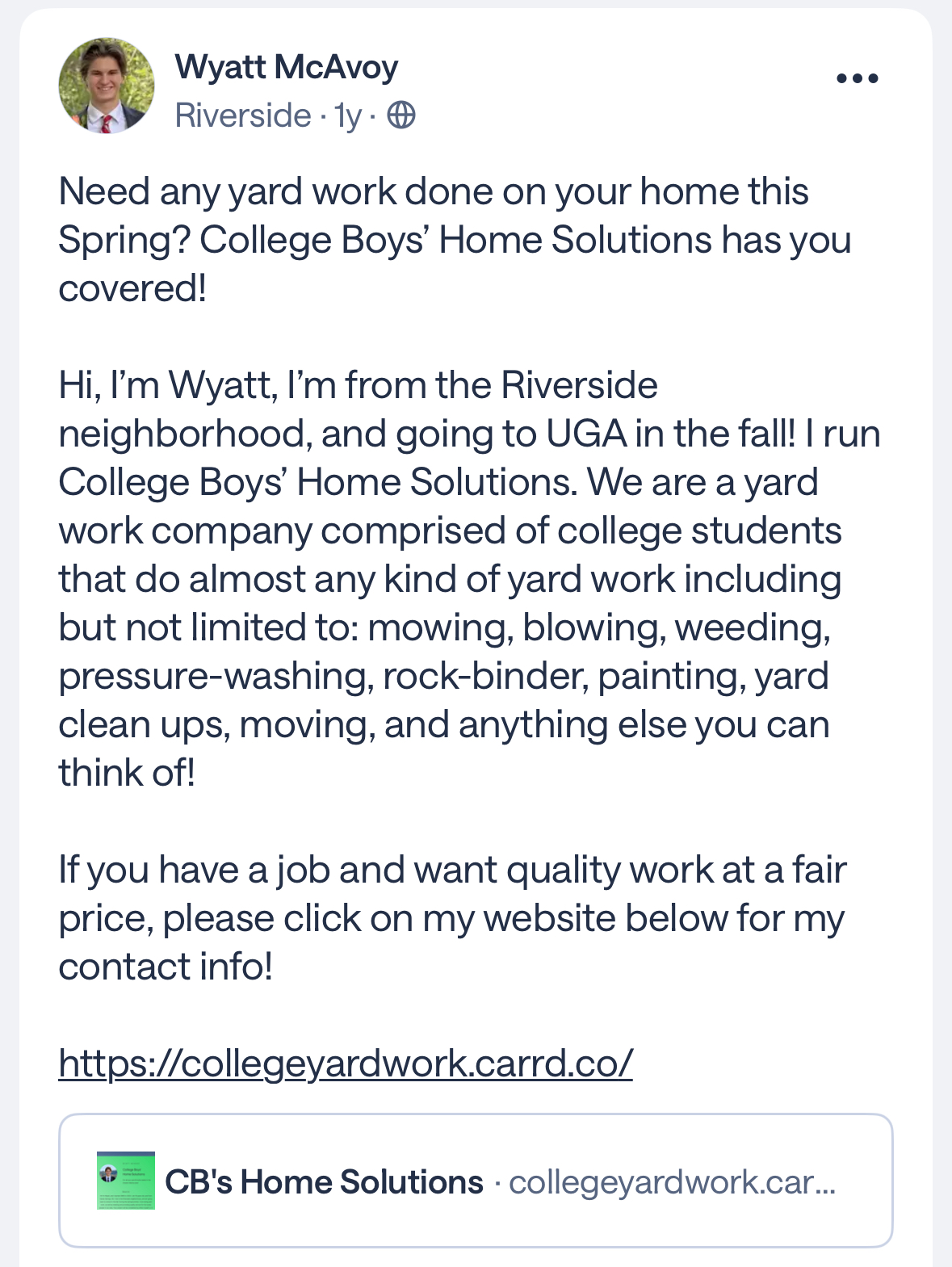
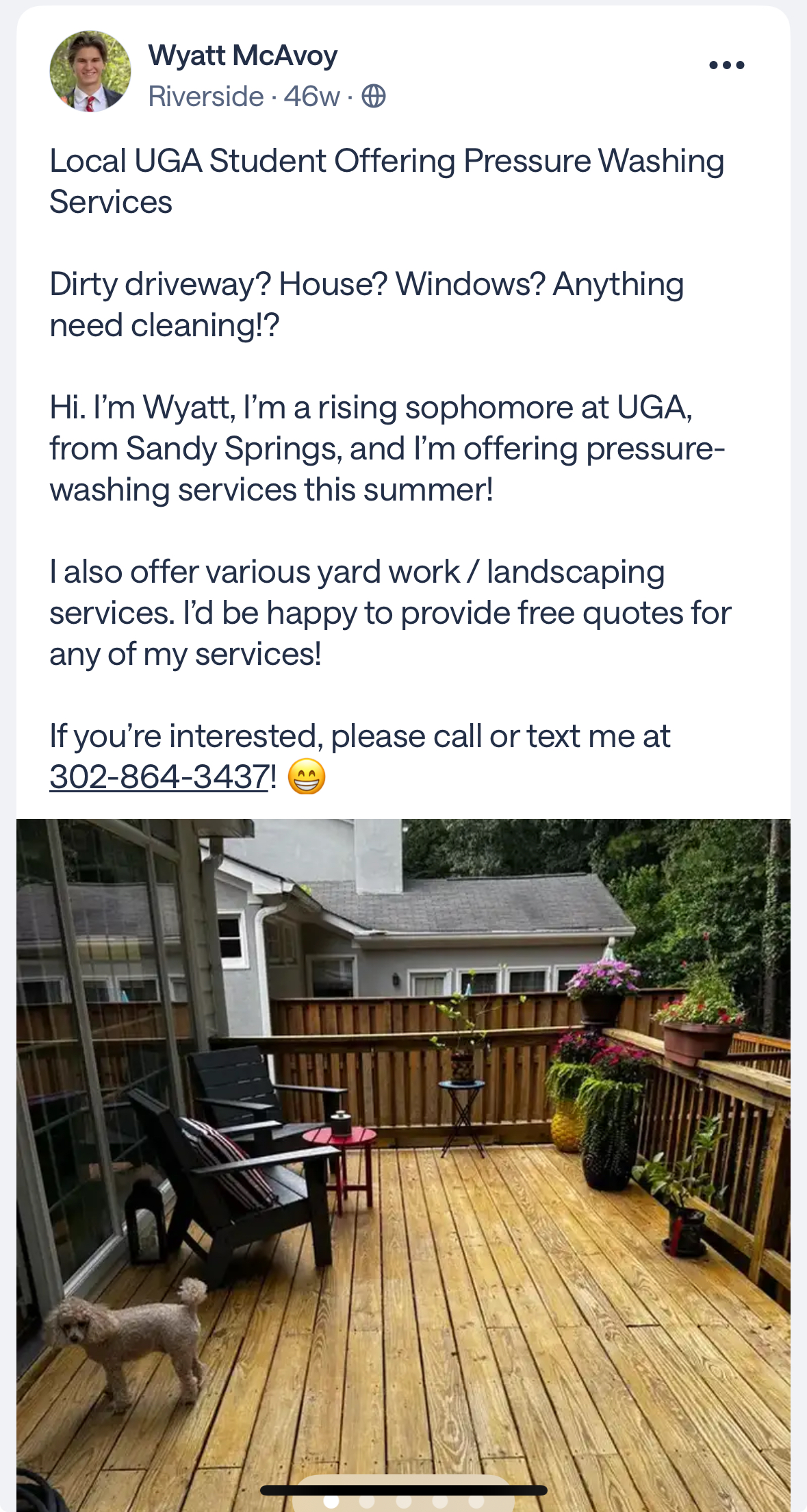
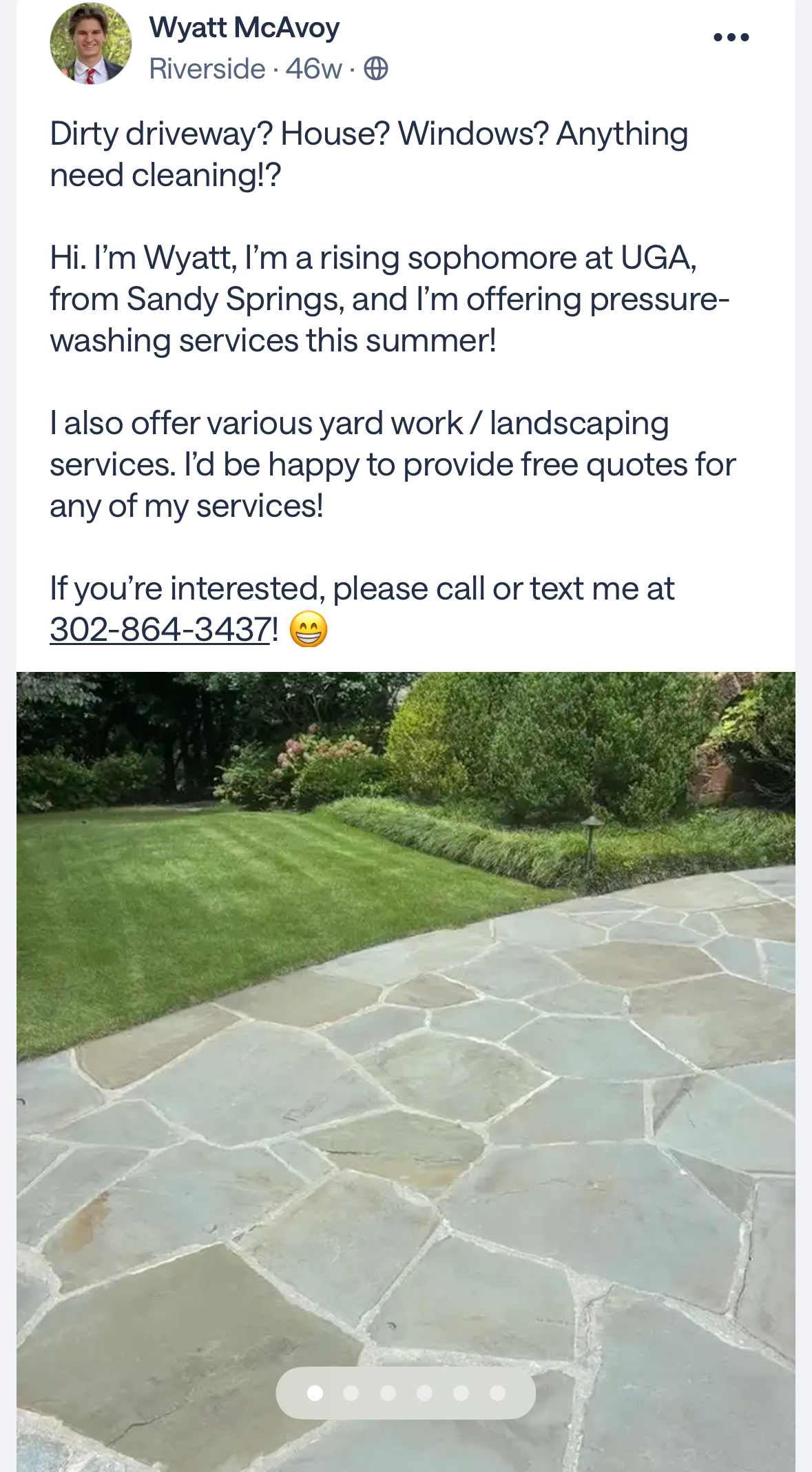
One post a week, every week, March through August. Show up in the same feed for months and eventually people just recognize the name, the way they'd recognize any other neighbor who'd been around a while. By midsummer I was the pressure washing kid people knew before they even needed the service.
Run the numbers on that rhythm and they're almost embarrassingly simple: about 25 posts over the season, each averaging three to five leads, with something like 90% of those converting into booked jobs. Somewhere between 75 and 125 conversations, most of them ending in work, and the whole pipeline cost me ten minutes a week to maintain.
Step three: the response
Leads came in two ways, either as a comment on the post itself or as a direct message through my number or my site, and I treated both the same: reply within the hour whenever I could manage it.
The first credible person to respond on Nextdoor usually wins the job, and a fast reply is exactly the kind of reliability a customer is hoping for when they hire someone off a neighborhood app. Most conversations went naturally from there, without a script or a pitch to lean on. If I could picture the job from what someone described, I'd give a price on the spot and we'd have it booked that same week. If it was harder to read over text, I'd offer to come out for a free look, which locked the job in before they kept shopping and let my work ethic and my handshake close things in person.
Step four: playing offense
The weekly post covered a baseline, but I didn't just sit around waiting on it.
Nextdoor is full of people asking for help outright. "Anyone know someone who pressure washes?" "Looking for a reliable lawn guy." Those posts are demand sitting out in the open, and I watched for them and answered fast with the same pitch every time: a local college student, happy to swing by for a free quote. Because the customer had already raised their hand, those request threads converted better than almost anything else I posted. All I had to do was show up first with a decent answer.
Step five: the flywheel
Good work on Nextdoor doesn't stay private for long.
A job done well got mentioned in the comments whenever a neighbor asked for a referral, and sometimes a customer would post about me on their own, unprompted, sitting right there on the platform my next customer happened to be scrolling. The customers themselves came back too, since a driveway gets dirty again and a deck needs another pass by next spring, and I kept those relationships warm enough that one-time jobs quietly turned into a recurring base. By the second season, a real share of my work came from repeat customers and referrals before I'd written a single new post that spring, proof the loop was running on its own by then.
What I'd tell anyone starting today
Getting customers here takes a steady rhythm and a reputation you earn one post at a time, more than it takes any ad spend.
Show up every week even when it feels repetitive. Answering fast matters just as much, and so does giving people a real price or a free quote right there in the thread. Say you're a student if you are one. On a neighborhood app, that detail works in your favor more than people expect. Treat every job like the referral machine it is, because on Nextdoor that's exactly what it is, one shared feed where every neighbor sees whether your name is worth passing along.
Wyatt McAvoy is Head of Product at Village. He ran College Boys' Home Solutions through high school and founded Niche Supplements at the University of Georgia. He's a Finance major at UGA's Terry College of Business and will be interning in investment banking at Houlihan Lokey in summer 2027.