


By Wyatt McAvoy, Head of Product at Village. Former busboy and hockey player who kept a pressure washer in the truck and a business podcast in his ears.
For most of high school I made money the way sixteen-year-olds usually do, at whatever the restaurant paid per hour and not a cent more. I bussed tables, ran food, learned to move fast and keep my head down, and it built a real habit of showing up on time. The ceiling was still right there the whole time. More hours were the only lever I had, and a week only has so many of them.
I couldn't shake the feeling that I had more value in me than a fixed hourly rate would ever pay out. I had energy, hustle, and enough respect for the guys I'd watched build things from scratch to think I could try it myself. I just needed an opening.
I found it the summer after junior year.
It started in the garage
A few friends were already mowing lawns and making decent money at it, which was signal enough for me. Instead of buying a truck or taking out a loan, I walked into my dad's garage, took stock of what was sitting there, and got to work.
The first version of the business ran on unglamorous labor: mowing lawns in the Georgia heat, bagging leaves, cutting down small trees with whatever tool happened to be closest. The kind of work that teaches you fast whether you want to run a business or just liked the idea of one, and I kept coming back to it week after week.
Pricing got easier the more jobs I quoted. Reading a yard before I gave a number got easier too, and so did the conversation on a customer's front step. Then I stumbled into the thing that changed the math for good.
The tool that changed everything
Pressure washing.
A job that would cost a landscaper half a day of manual labor got done in a fraction of the time once the machine did most of the heavy lifting. I was clearing somewhere between $60 and over $100 an hour depending on the job, against the roughly $20 an hour restaurants paid me.
Once the business had earned enough to reinvest, I outgrew my dad's tools and bought a high-PSI pressure washer with a set of attachments that turned into my main money maker, plus weed whackers, a chainsaw, and whatever else the next job called for.
I named it College Boys' Home Solutions. CBHS had a ring to it that the neighborhood liked.
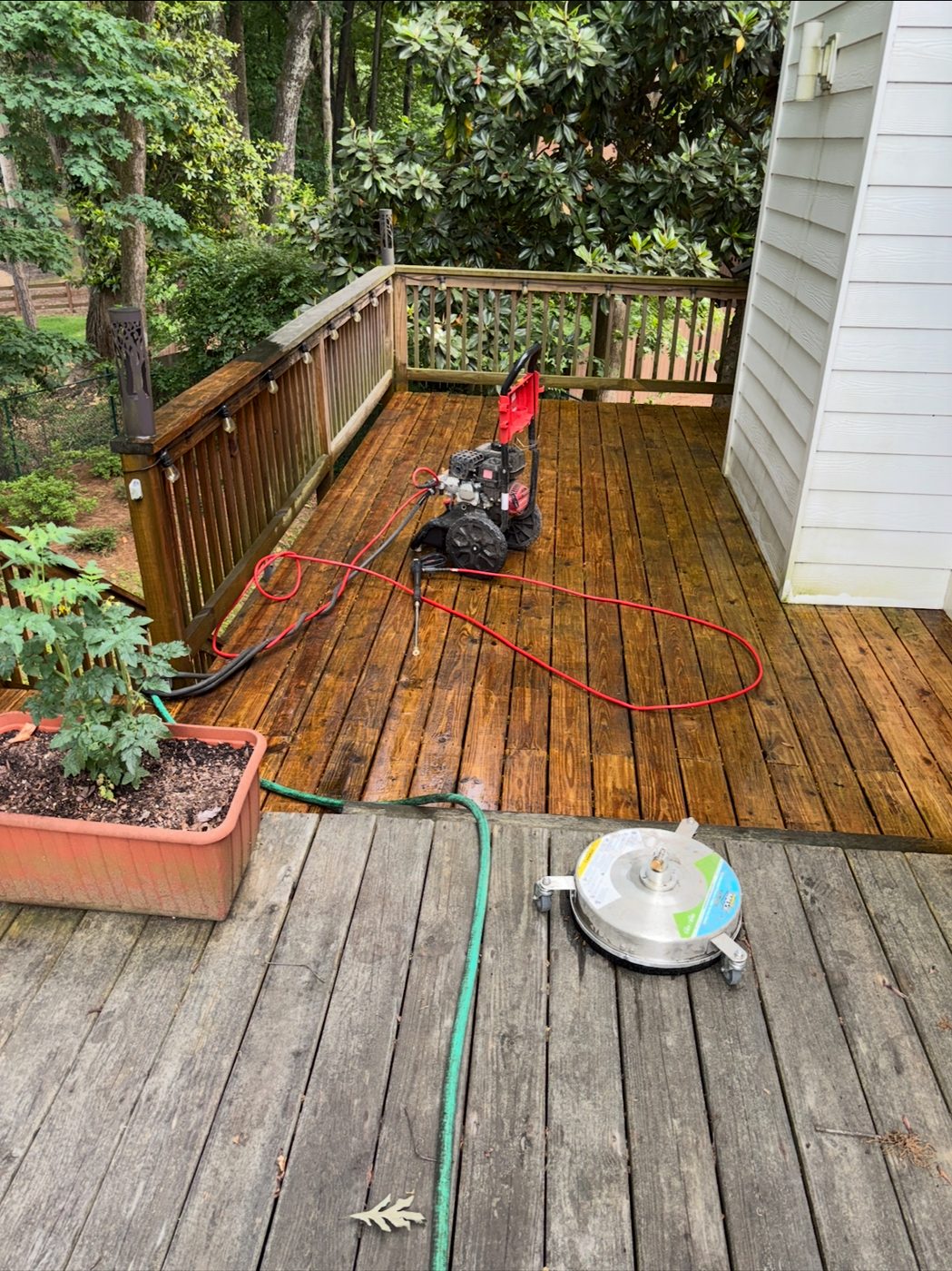
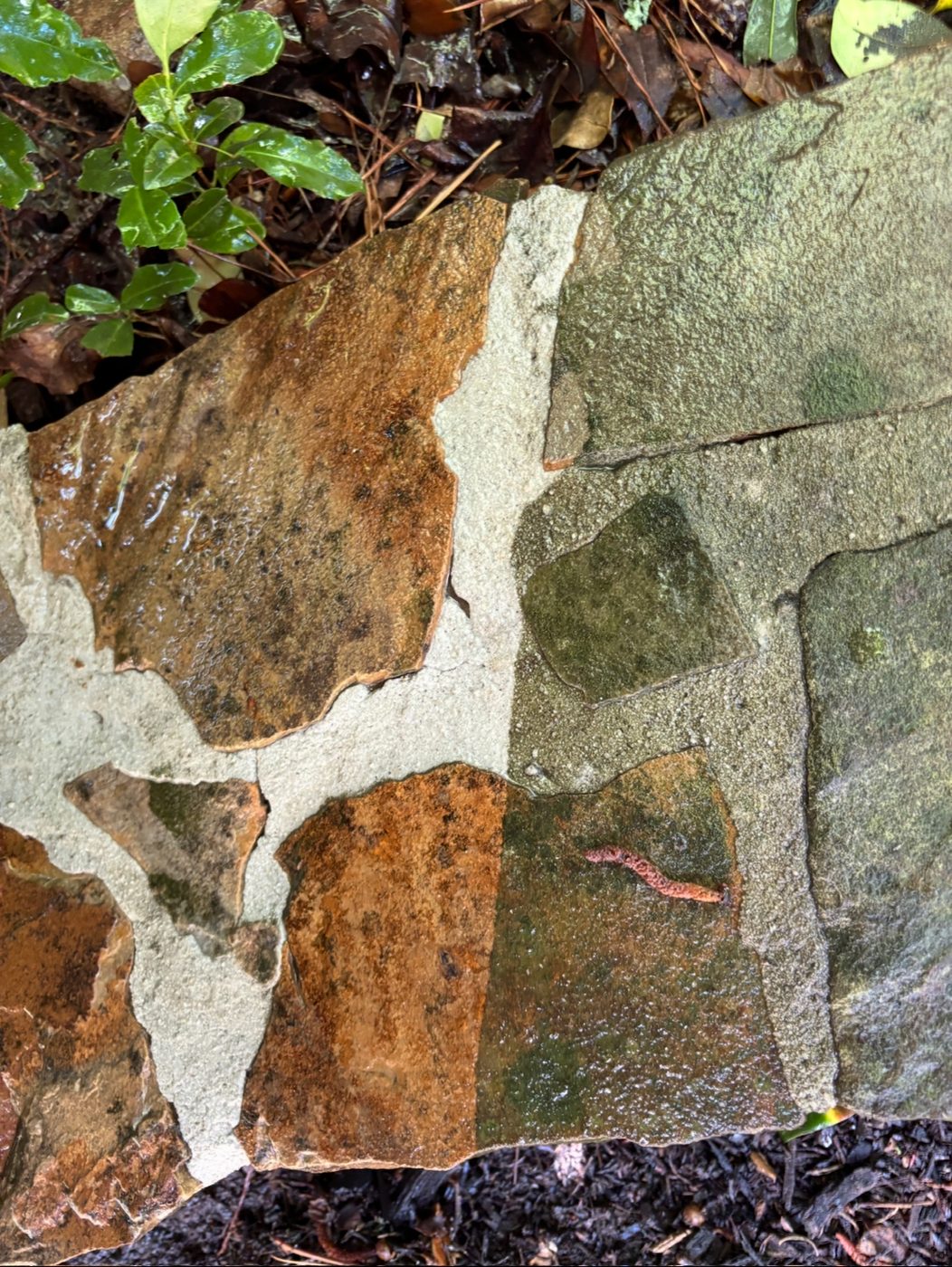
Those photos are straight from the CBHS camera roll. A pressure-washing job photographs its own before-and-after almost automatically, so most of the selling happens the moment someone sees the line where clean meets dirty.
The first $1,000 day
I remember the day the ceiling finally broke.
One job did it: pressure washing nearly the entire exterior of a Sandy Springs mansion, more square footage than I'd ever taken on at once. I was more than ready for it, and by the end of the day I'd cleared $1,000.
At seventeen, when the most you've ever seen in your bank account from a single day of work is a couple hundred dollars, a four-figure day lands differently. The restaurant ceiling turned out to be nothing more than a paycheck structure some manager had built, and I didn't have to keep living inside it.
The homeowner also handed me extra cash on top of the job rate before I left, and it kept happening on the bigger jobs after that. Customers noticed the effort: showing up early, staying late, leaving a property cleaner than I'd found it, being decent company while I worked. They'd reach into their wallet without me ever asking. Each tip told me the same thing, that how you carry yourself on a job counts as part of the product, and people pay you back for it.
That job changed how I thought about work and value long after the $1,000 was spent.
How the customers came
I never ran an ad or paid for a lead. My pipeline was word of mouth and Nextdoor, the same channel Will used selling pine straw a few years before me, in the same part of town.
The "college kid hustling" angle is what gets you in the door when you're selling home services young. Neighbors root for it, and a lot of them will give a local student a shot they'd never give a company with no face attached to it. That angle buys exactly one thing: the first phone call. Getting the second call depends on being easy to work with, showing up when you said you would, doing the job right, and being someone a customer doesn't mind having around their yard for an afternoon. Enough of that and one-time jobs start turning into repeat customers, and repeat customers eventually start sending you their neighbors.
I listened to business podcasts the whole time I worked, Alex Hormozi more than anyone. Making money and figuring out how to make more of it felt like the same activity to me, and I liked doing both at once.
The part where it became a real company
By my second spring and summer running CBHS, I had more work than I could get through alone.
I hired a few friends at $35 an hour, well above anything else available to a teenager in that town. Managing people for the first time taught me things a classroom never gets to. A crew's attitude follows the boss's, and the standard you hold for yourself becomes the ceiling for everyone working under you. I wasn't always great at being a boss, but I got better at it the longer I did it.
CBHS brought in around $50,000 in revenue across the time I ran it, with a best month of $10,000 in June 2025, starting from tools I'd borrowed out of a garage.
What it taught me
The money mattered less than what stuck with me afterward.
Running CBHS taught me to price a job, manage a customer relationship, hire someone, hold a standard, and build something out of nothing at all. Value doesn't have to attach to an hourly rate someone else sets for you. The gap between wondering whether you could do something and going and doing it turned out to be a lot smaller than it looks from the outside, as long as you're willing to start with whatever's already in the garage.
That foundation gave me the confidence to start Niche Supplements in college, which UGA backed with $20,000, and it's a big part of why I'm Head of Product at Village today, building the tool I wish I'd had while running CBHS.
Why Village changes this
When I ran CBHS, I managed everything by hand, with texts, notes, cash, and checks all tracked through mental math, and my whole jobs list living inside an iPhone Notes app. It worked fine while I was the only person involved. Adding crew made it harder almost overnight. Customer messages piled up in scattered text threads, and keeping track of who owed what turned into guesswork I did in my head at night.
Village is the tool I wish someone had handed me back then, one place to capture a lead, book the job, send the quote, collect the payment, and coordinate the crew, all from a phone, without needing an office or anything that looked like a back office.
A fast reply matters as much as the wash itself, and a clumsy invoice can undo a good job if the customer has to chase you down just to pay it. All of it adds up to whether they call again. CBHS got there eventually, after enough trial and error. Village gets a provider there starting on the first job.
Wyatt McAvoy is Head of Product at Village. He ran College Boys' Home Solutions through high school and founded Niche Supplements at the University of Georgia. He's a Finance major at UGA's Terry College of Business and will be interning in investment banking in summer 2027.